
A Trade Mission to Papua New Guinea: Meeting the Women Behind Our Cocoa
In October 2025, I had the incredible opportunity to travel to Papua New Guinea as part of a Cocoa Buyers Trade Mission, and it’s a journey I’ll carry with me for a long time.
The focus of the trip was two key events: the Bougainville Chocolate Festival and the East Sepik Cocoa Cupping Competition. Our delegation included both bean-to-bar craft chocolate makers and importers, which made it a really valuable mix, not only for learning, but for meaningful discussions around quality, sourcing, and the realities of cocoa production.
This was actually my second trip organised by the International Trade Centre (ITC), and I felt inspired from the moment I was invited. I wanted to return not only to learn more about cocoa, but to meet more farmers, hear their stories, and deepen the relationships that Cocoa Sisters is built on.
Seeing Cocoa Production Up Close
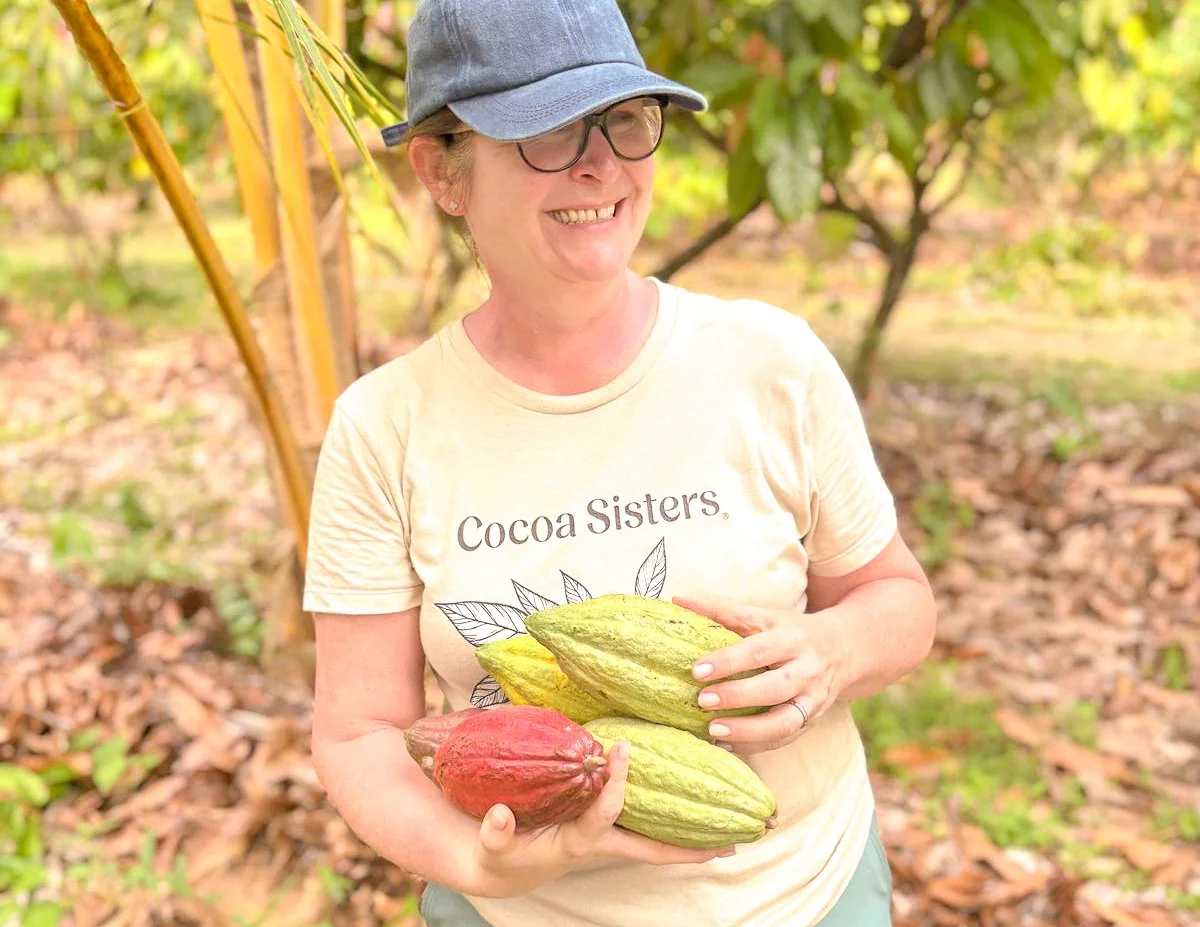
I’ll be honest — I’m still very much a novice when it comes to cocoa growing. But compared to my first visit, I did feel more confident this time. I understand more about what happens at origin: the harvesting, fermenting, drying — and just how much knowledge and skill it takes to do it well.
What I realised again and again on this trip is how difficult it is to truly understand the challenges growers face from the opposite side of the world. You can email, you can message, you can have video calls… but being there, face to face, changes everything.
Suddenly you’re not just hearing the challenges — you’re standing in them. You’re seeing the environment, the climate, the infrastructure, the long travel distances. You feel it.
A Deeper Understanding of the Supply Chain
One of the biggest learning points for me in Papua New Guinea was around bean drying, and how much this step impacts flavour.
In some areas, cocoa beans can develop a smoky taste, which is not typically what chocolate lovers in the UK expect when they open a bar. But the reason isn’t careless processing, it’s climate and practicality.
Papua New Guinea can be very rainy, and drying beans in the sun becomes incredibly difficult without the right infrastructure like solar dryers. So farmers often dry beans artificially using equipment powered by burning wood, and that smoke can influence the flavour.
It really deepened my understanding of the cocoa supply chain, and reminded me how much quality is shaped by factors that farmers can’t always control, and how important it is that we support them with training, tools and access to better methods.
Moments I’ll Never Forget
The welcome we received at both the festival and the cupping competition was honestly like nothing I’ve ever experienced. The pride, the celebration, the community spirit… it was unforgettable.
And what struck me most was how culturally diverse Papua New Guinea is, even within one country, the cultural differences from region to region are vast.
Then there was the slightly chaotic side of travel too, like turning up at the airport and not knowing if we’d actually be getting on the plane… even with boarding passes in our hands! It’s those moments that really remind you how different things can be when you’re working across global supply chains.
Reconnecting with Delwin
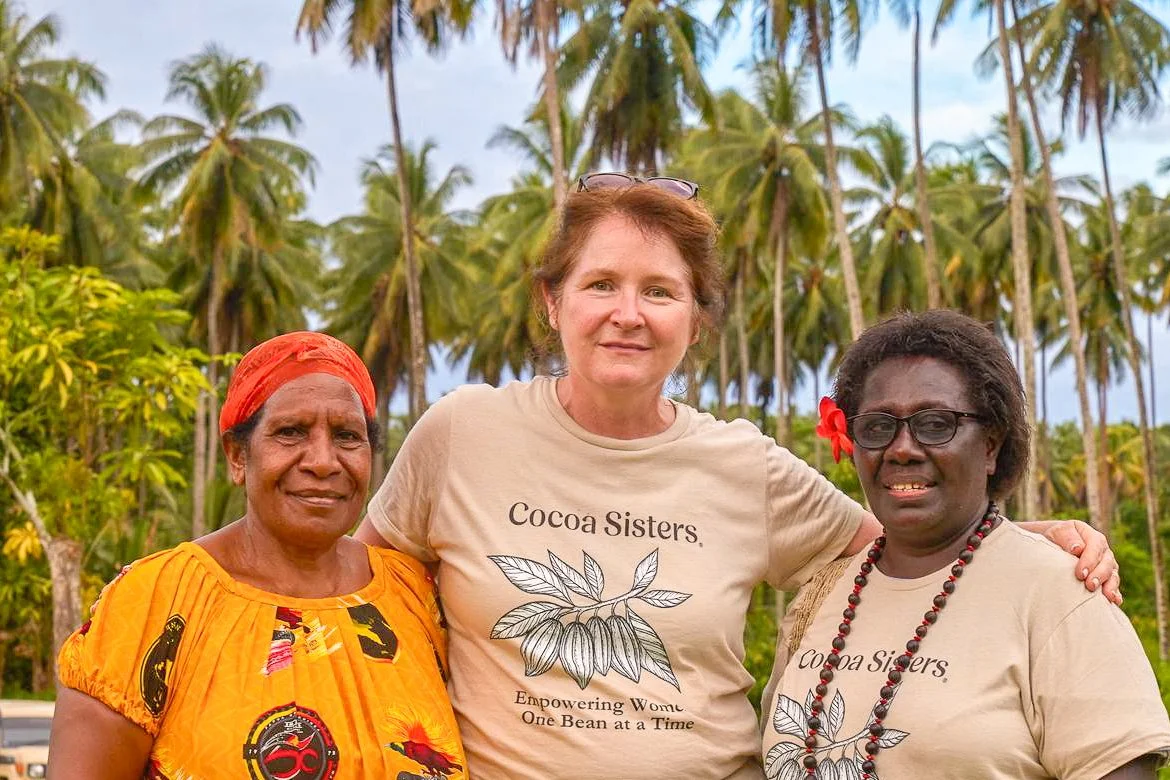
A very special part of this trip for me was reconnecting with Delwin, one of the women cocoa farmers I already work with through Cocoa Sisters.
Our original plan had been to spend a couple of days at Delwin’s home, which I was really looking forward to. But travel had other plans.
When we arrived at the airport, we were told we couldn’t fly, because the island we were travelling to had run out of plane fuel (yes, really!). This meant they couldn’t put too much weight on the plane, or it wouldn’t have enough fuel to fly back again… or so we were told.
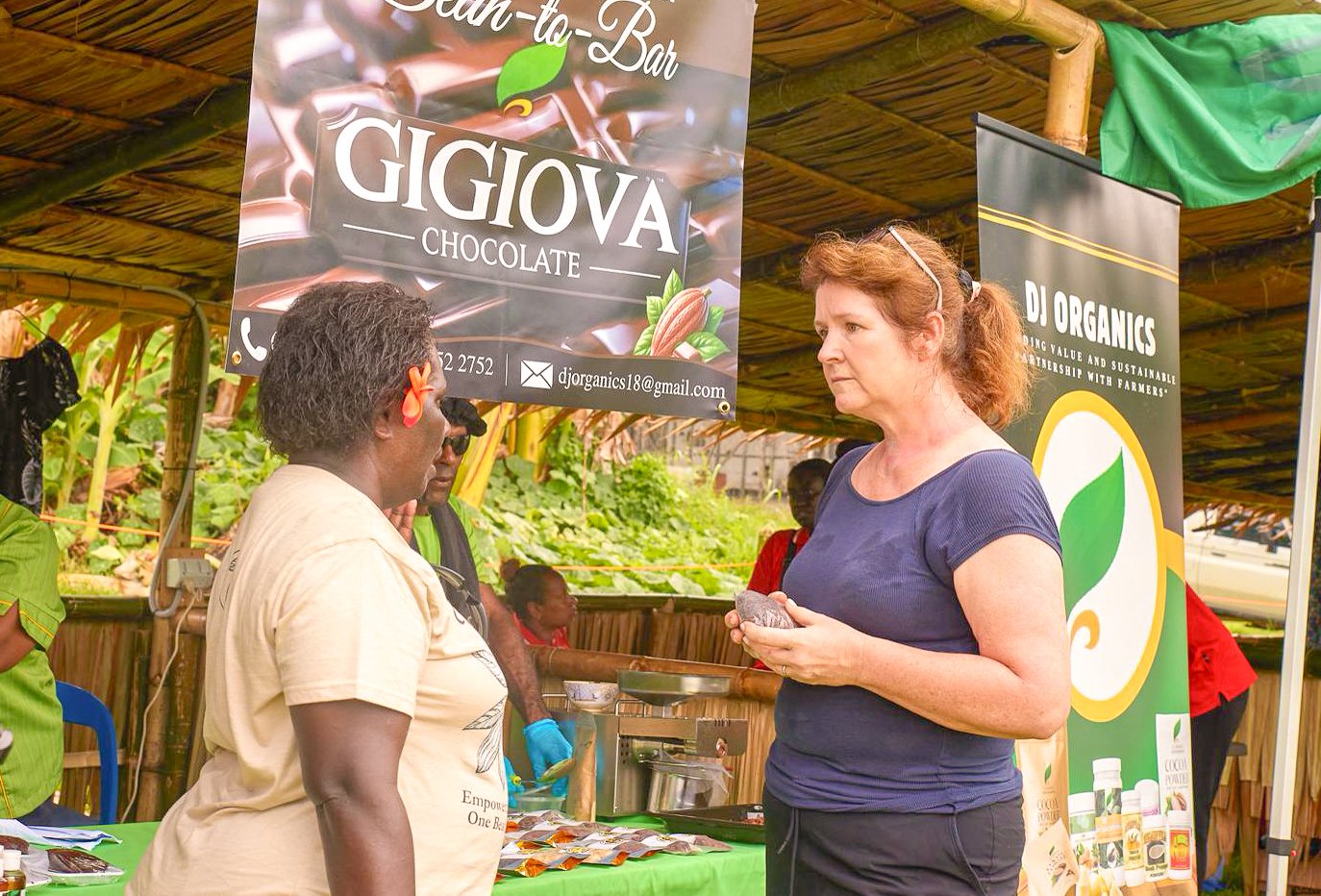
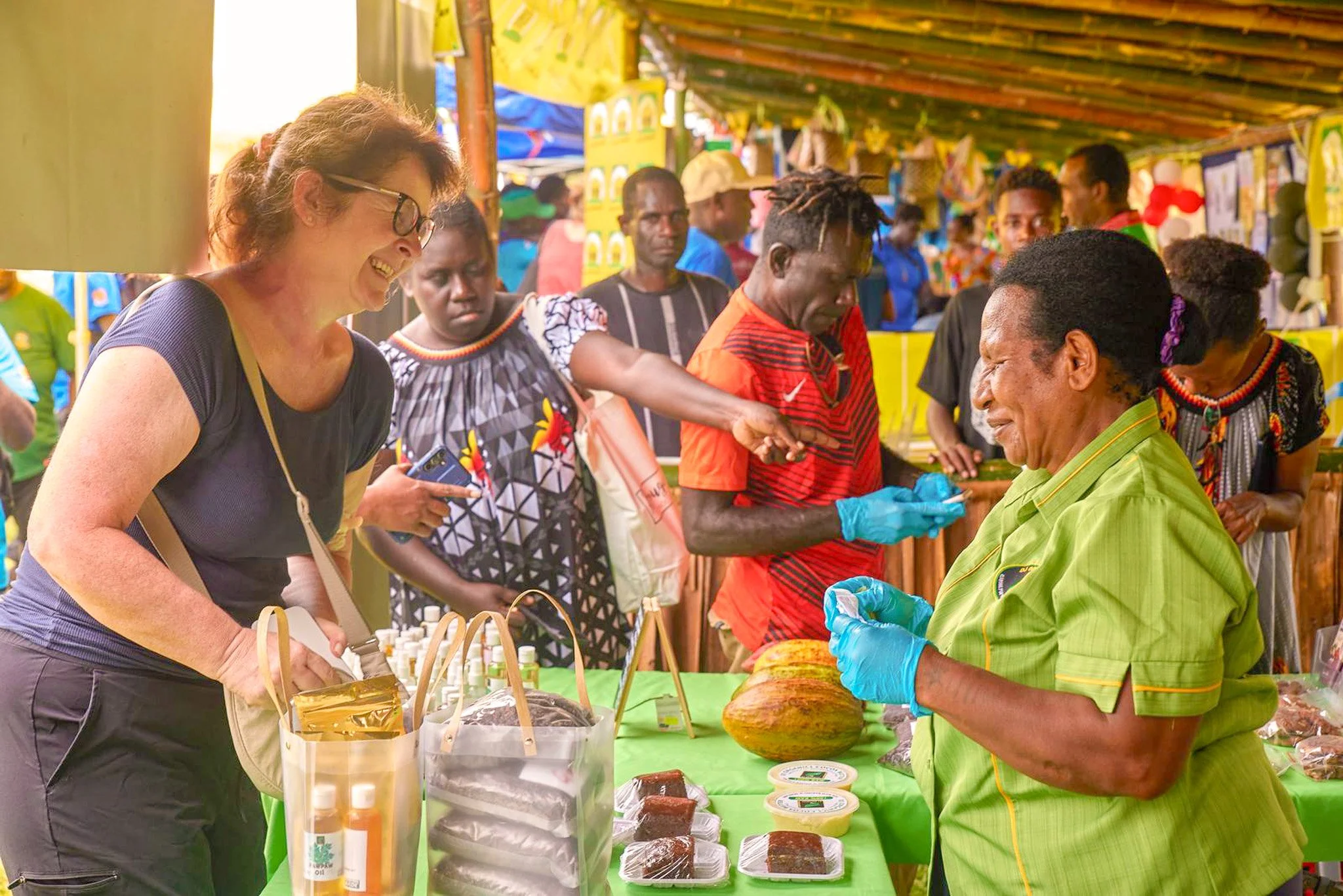
Because of this, my time with Delwin was limited, a brief encounter in Wakana, and then seeing her again at the Bougainville Chocolate Festival, where she was selling her products.
Even though it wasn’t the time together we hoped for, being with her in person was incredibly meaningful, and I even got to meet her granddaughter, Martha, which was such a beautiful moment.
Why Delwin’s Story Matters So Much
Delwin’s story is powerful, not just because she’s a cocoa farmer, but because of the way she uses her work to support other women around her.
Delwin supports women who have lost their husbands in the recent conflict in Bougainville, and although she and I have spoken about this before, hearing it again while being there hit me in a different way. I’m always struck by how driven and passionate she is about helping others.
Her resilience is rooted in the matrilineal strength of Bougainville, and for me, Delwin is exactly what we mean when we talk about our Sisters in Cocoa.
Our trade is more than simple sourcing. It’s a shared responsibility.
Delwin inspires me to ensure Cocoa Sisters is strong and robust enough to provide the consistent, sustainable market that her hard work deserves.
The Ten-Minute Hug I’ll Never Forget
There is one moment that stands out above all others.
On day three of our trip, we visited the Women’s Cocoa Cooperative in Wakana. It was a four-hour drive on an extremely bumpy road, and by the time we arrived it was starting to get dark, it was very much a quick turnaround.
Delwin had driven there to meet me. It was three hours from her home, and we only had about ten minutes together.
I didn’t even know she was coming.
When I saw her, we had the biggest hug, and I genuinely think that was the highlight of the entire trip for me. It reminded me that these connections are real, human relationships, not transactions.
The Role of ITC in Empowering Women Farmers
Initiatives like the ITC support programmes are genuinely game-changing, because unlike general aid programmes, the ITC provides targeted agricultural training focused on value addition.
They teach farmers like Delwin the specific skills of optimising fermentation and drying, which directly improves cocoa quality. This matters because high quality cocoa means farmers can command a better price for their work.
It is practical, powerful support, and it builds independence.
New Opportunities for Cocoa Sisters
This trip also opened my eyes to potential future collaborations. Papua New Guinea produces so many incredible ingredients beyond cocoa, including vanilla, coffee, nuts, and more. There is so much possibility for development, partnerships and creativity in the future.
What This Trip Taught Me
Professionally, the trip helped me understand the true power of value-addition. I saw firsthand how the ITC empowers farmers not just to grow cocoa, but to understand the business of cocoa, how better fermentation leads to better prices.
It taught me that education is one of the most sustainable forms of investment we can support.
Personally, it humbled me deeply. Seeing the logistical challenges Delwin and others overcome daily, bad roads, humidity, distance, made my own hurdles in the UK feel insignificant.
I left Papua New Guinea feeling a profound weight of responsibility: Delwin has done the hard work of creating “gold” from the soil; my job is to show the same level of dedication in creating chocolate worthy of all her work.
A New Lens on Sustainability and Chocolate Pricing
Since returning, I find myself looking at cheaper chocolate in the UK and asking: what has been sacrificed to achieve such a low price?
When you witness everything involved in growing, harvesting, fermenting and drying cocoa, you realise that chocolate should never be cheap, not if everyone in the process is treated fairly.
What I Want You to Feel When You Eat Cocoa Sisters Chocolate
When someone buys a bar of Cocoa Sisters chocolate, first and foremost I want them to be blown away by the flavour, to experience that cocoa from these women can stand up against the best in the world.
But beyond flavour, I want people to feel a connection to the women behind it.
When you buy Cocoa Sisters chocolate, you are validating the technical skill of the women who made it possible, and helping to fund a future for their families and communities.
Three Words for the Trip
If I had to describe this journey in three words, it would be:
Grounding. Humbling. Fortifying.
What’s Next for Cocoa Sisters
So far, Cocoa Sisters has mostly been me, and it has been self-funded.
But the next stage is bigger.
I’m in the process of building a team of like-minded women who share the vision of Cocoa Sisters (and I’ve already started this!).
We’re also about to launch a crowdfunding page, we need to raise £5,000 to buy our next batch of cocoa beans and turn them into chocolate bars.
This mission has always been about more than chocolate. It’s about women, empowerment, and long-term change, and this trip reminded me exactly why we’re doing this.